Digital Menu vs Paper Menu: Why Dubai Restaurants Are Switching
The paper menu has been a staple of the restaurant industry for over a century. But in Dubai, a city that embraces innovation faster than almost anywhere else, paper menus are rapidly being replaced by digital alternatives. The shift accelerated during the pandemic, but the reasons restaurants are staying digital go far beyond hygiene. Cost savings, operational flexibility, better customer experience, and data insights are driving a permanent change in how Dubai restaurants present their offerings.
The True Cost of Paper Menus
Most restaurant owners underestimate how much paper menus actually cost. A single professionally designed and printed menu costs between AED 15 and AED 50 depending on quality, size, and finishing. A restaurant with 30 tables needs at least 35-40 copies to account for wear and loss. That is AED 525 to AED 2,000 just for one print run.
Now factor in how often menus change. Seasonal updates, price adjustments, new dishes, removed items, special promotions, and Ramadan menus all require reprinting. Most Dubai restaurants reprint their menus four to six times per year. Over twelve months, a mid-sized restaurant can easily spend AED 3,000 to AED 10,000 on menu printing alone, and that does not include the design fees for each revision.
Paper menus also degrade. Spills, food stains, torn pages, and general wear mean constant replacement. A laminated menu lasts longer but costs more and still cannot be updated without reprinting.
What a Digital Menu Offers
A digital menu solves every one of these problems. Here is what changes when you go digital:
- Instant updates: Change a price, add a dish, or mark something as sold out in seconds. No reprinting, no waiting, no waste.
- Zero recurring print costs: The ongoing cost of a digital menu is effectively zero once set up.
- Bilingual by default: Dubai's restaurants serve a multilingual customer base. A digital menu can display in English, Arabic, and additional languages simultaneously without doubling the page count.
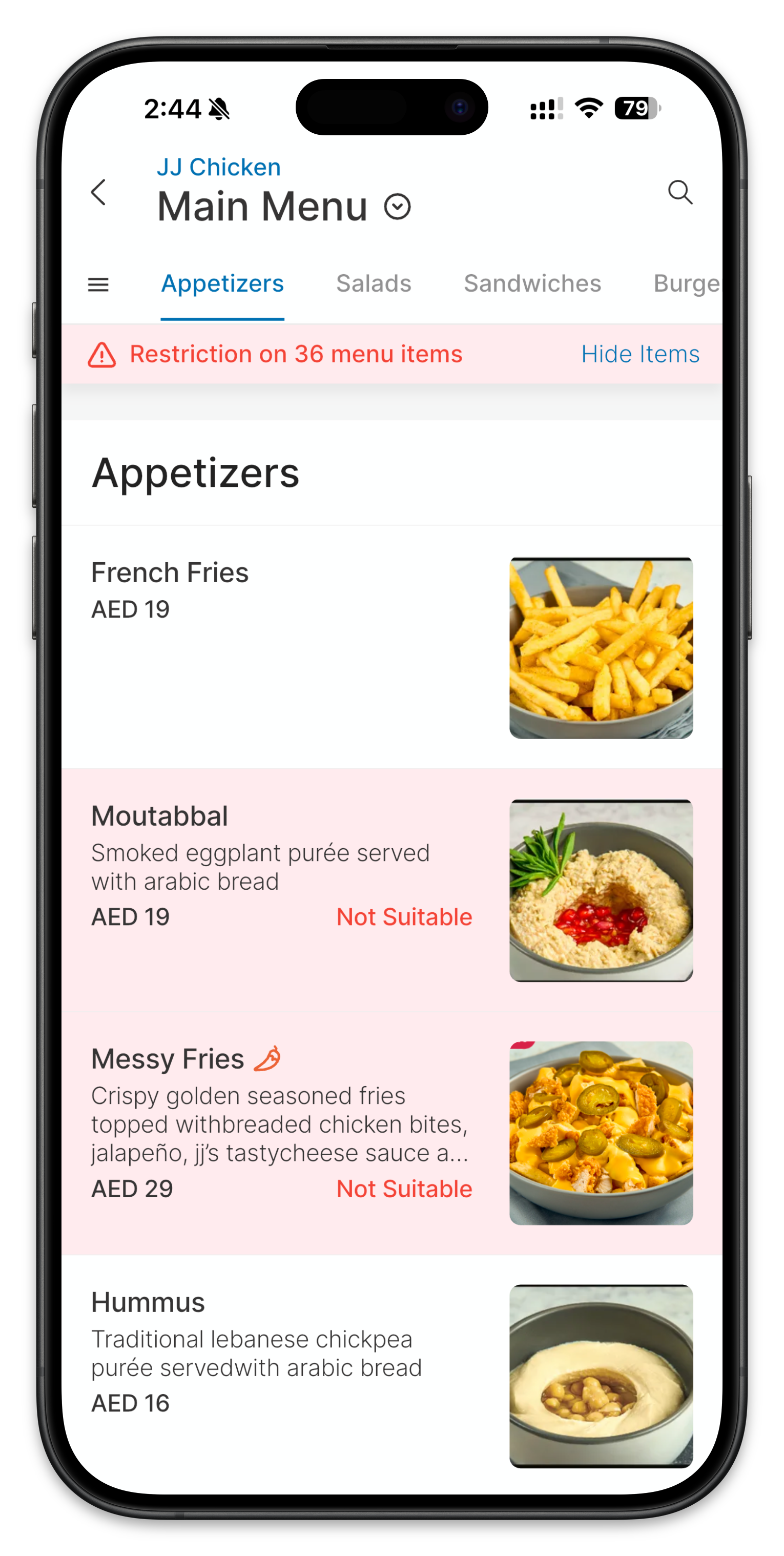
- Photos for every dish: Research consistently shows that menus with photos increase order values by 15-30%. Paper menus with photos are expensive and bulky. Digital menus display photos naturally.
- Allergen and dietary information: Mark dishes as gluten-free, vegan, nut-free, or halal with clear icons. Customers can filter the menu based on their dietary needs.
- Real-time availability: If the kitchen runs out of an ingredient, the dish can be marked as unavailable instantly, eliminating awkward conversations at the table.
The Customer Experience Advantage
Dubai diners are tech-savvy and accustomed to digital interactions. A well-designed digital menu feels modern and professional. Customers can browse at their own pace, zoom into photos, read detailed descriptions, and make informed choices without feeling rushed by a hovering waiter.
For tourists, who make up a significant portion of Dubai's restaurant customers, digital menus with photos eliminate the language barrier entirely. A visitor from China, Brazil, or Russia can see exactly what each dish looks like regardless of whether they read English or Arabic.
Speed of Service
Digital menus reduce the time between seating and ordering. Customers start browsing immediately via a QR code on the table rather than waiting for a staff member to bring menus. In busy restaurants, this can shave five to ten minutes off each table turn, directly increasing your daily covers and revenue.
Data and Insights You Cannot Get from Paper
A paper menu is a black box. You print it, hand it to customers, and have no idea what they looked at, how long they spent deciding, or which sections they ignored. A digital menu generates data:
- Most viewed dishes: Know which items attract the most attention, even if they are not the most ordered.
- Browse-to-order ratio: Identify dishes that people look at but do not order, signalling a pricing or description issue.
- Peak browsing times: Understand when customers are looking at your menu online, helping you optimise your marketing efforts.
- Category performance: See which sections of your menu generate the most engagement and revenue.
Common Objections and Honest Answers
"My customers prefer paper menus"
Some do, and that is fine. The best approach is to offer digital as the default with paper available on request. Over time, most restaurants find that paper requests drop to under 10% of tables within three months of switching.
"Setting up a digital menu is complicated"
It was, five years ago. Today, platforms like Places UAE offer free digital menu setup that takes less than an hour. You upload your menu items, add photos, set prices, and your menu is live with a unique QR code ready to print and place on tables.
"We will lose the premium feel"
Design matters. A poorly designed digital menu looks cheap, just as a poorly designed paper menu does. The difference is that a well-designed digital menu can include rich photography, elegant typography, and smooth interactions that actually elevate the perceived quality of your restaurant.
Making the Switch
Start by digitising your current menu exactly as it is. Do not try to redesign everything at once. Get your existing offerings online, place QR codes on every table, and train your staff to guide customers naturally. Once you are live, iterate: add photos, refine descriptions, test different menu structures, and use the data to optimise. The cost savings start immediately, and the customer experience benefits compound over time.
Get Your Free Digital Menu on Places UAE
Join the Places cashback network and your digital menu is included. No subscription.
Get Your Free Digital Menu